The rapid shift to remote and hybrid work has fundamentally transformed how businesses operate. With distributed teams becoming the norm rather than the exception, companies face new challenges in maintaining productivity, ensuring accountability, and supporting employee well-being. Enter employee monitoring software, a technology that has sparked both interest and controversy in equal measure.
While workplace surveillance raises legitimate concerns about privacy and trust, modern employee monitoring doesn’t have to be invasive or controlling. When implemented ethically and transparently, employee monitoring software can actually support healthier remote teams by providing visibility, preventing burnout, and fostering better work-life balance. The key lies in how organizations choose to use these tools.
What Is Employee Monitoring in Remote Work Environments?
Employee monitoring refers to the use of technology to track and analyze employee activity, productivity, and behavior in the workplace. In remote work environments, employee monitoring software bridges the visibility gap created by physical distance.
Modern employee monitoring tools typically include:
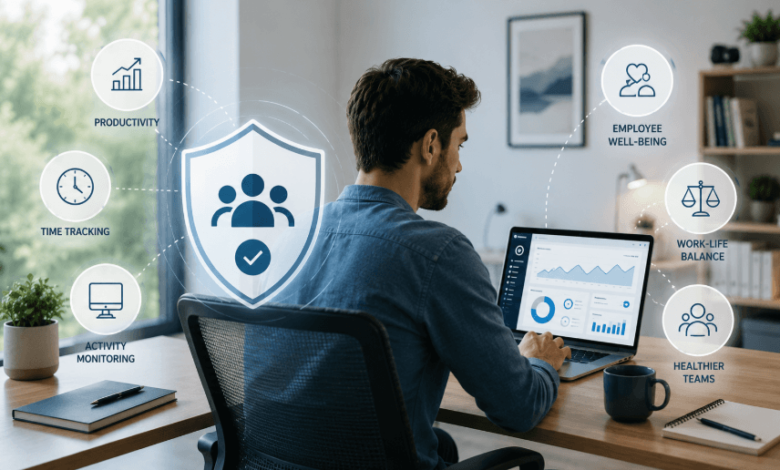
• Productivity tracking to measure work output and efficiency
• Time tracking to understand how hours are allocated
• Workflow analytics to identify bottlenecks and optimize processes
• Collaboration insights to improve team communication
• Cybersecurity monitoring to protect sensitive data
For remote teams working across different time zones and locations, these tools provide crucial visibility into team performance and workflow patterns that would be naturally observable in a traditional office setting.
Why Companies Use Employee Monitoring Software for Remote Teams
The adoption of employee monitoring software stems from genuine business needs in remote workforce management. Without the natural oversight of a physical office, companies turn to digital solutions to maintain accountability and visibility.
The Shift From Office Supervision to Digital Visibility
Traditional office environments provided informal supervision through physical presence. Managers could observe team dynamics, identify struggling employees, and address issues in real-time. Remote work eliminated these organic touchpoints, creating a need for structured visibility tools.
How Employee Monitoring Supports Remote Workforce Management
Employee monitoring software helps organizations:
• Maintain accountability without micromanaging individual tasks
• Measure productivity based on outcomes rather than office presence
• Improve project visibility and coordinate distributed teams
• Support cybersecurity compliance in work-from-home environments
• Identify workflow inefficiencies and optimize remote operations
These capabilities enable better resource allocation, informed decision-making, and proactive problem-solving in remote workforce management.
How Employee Monitoring Helps Build Healthier Remote Teams
When used as a tool for support rather than control, employee monitoring can actively contribute to employee well-being. The connection between visibility and wellness might seem counterintuitive, but data-driven insights help organizations identify and address problems before they escalate.
Preventing Remote Work Burnout
Remote workers often struggle with boundaries between work and personal life. Employee monitoring software can detect warning signs of burnout that might otherwise go unnoticed:
• Excessive overtime patterns indicating overwork
• Meeting overload reduces productivity and focus time
• Unhealthy work patterns like late-night or weekend activity
By identifying these patterns early, managers can intervene with support, redistribute workloads, or adjust expectations before employees reach exhaustion.
Improving Work-Life Balance
Productivity tracking helps establish healthier boundaries by encouraging structured work schedules and reducing the pressure to be constantly available. When teams can demonstrate productivity during core hours, the “always online” culture loses its justification, supporting better work-life balance.
Supporting Better Communication and Collaboration
Workflow analytics reveal communication bottlenecks and collaboration gaps that hinder team performance. By identifying where information gets stuck or which team members are isolated, organizations can improve team alignment and create more inclusive remote work environments.
See also: Business Maximization 2532360471 Strategy Framework
The Difference Between Healthy Employee Monitoring and Toxic Surveillance
Not all employee monitoring is created equal. The line between supportive oversight and invasive surveillance depends on implementation, intent, and transparency.
Examples of Harmful Monitoring Practices
Excessive tracking crosses ethical boundaries and damages employee trust:
• Webcam surveillance that violates personal privacy
• Keystroke logging that feels invasive and controlling
• Constant screenshot capture that eliminates autonomy
• Monitoring outside work hours that intrude on personal time
These practices breed resentment, anxiety, and disengagement, the opposite of a healthy workplace culture.
Why Transparency Matters in Employee Monitoring
Ethical employee monitoring requires clear communication about what is tracked, why it’s tracked, and how data will be used. Employees should provide informed consent and understand their privacy rights. Privacy-conscious monitoring strategies focus on aggregate patterns and productivity trends rather than invasive individual surveillance.
How Modern Employee Monitoring Software Is Evolving
The employee monitoring landscape is shifting away from activity-based tracking toward more sophisticated, outcome-focused approaches.
Outcome-Based Productivity vs Productivity Theater
Traditional monitoring often measured activity, mouse movements, key strokes, and active time, creating incentives for “productivity theater” rather than meaningful work. Modern employee monitoring software emphasizes outcomes, deliverables, and results, shifting focus from performative busyness to actual achievement.
The Rise of AI-Powered Employee Monitoring Software
AI-powered workforce analytics provide deeper insights through smart dashboards and predictive patterns. These systems identify trends over time, flag potential issues, and offer actionable recommendations, moving from simple data collection to intelligent workforce optimization while respecting employee autonomy.
Best Practices for Using Employee Monitoring Software Ethically
Organizations can implement employee monitoring in ways that build trust and support employee well-being:
• Set clear expectations about what will be monitored and why
• Focus on productivity trends over time, not constant observation
• Use data to identify support needs, not to punish employees
• Respect privacy boundaries and personal time
• Encourage autonomy and trust alongside accountability
Building a trust-first remote work culture means treating monitoring as one tool among many, not the foundation of management. Balancing accountability with employee privacy creates sustainable remote workforce management that employees can accept and even appreciate.
Challenges Businesses Face With Employee Monitoring
Despite potential benefits, implementing employee monitoring software presents several challenges:
• Employee resistance stemming from trust concerns and surveillance fears
• Privacy concerns about data collection and usage
• Legal and compliance considerations varying by jurisdiction
• Overreliance on productivity metrics at the expense of quality
• Misinterpreting employee activity data without proper context
Addressing these challenges requires careful planning, ongoing communication, and commitment to ethical implementation that prioritizes employee well-being alongside business objectives.
The Future of Employee Monitoring in Remote and Hybrid Work
As remote and hybrid work models mature, employee monitoring technology continues to evolve. The future points toward wellness-focused workforce analytics that prioritize human-centered productivity measurement over invasive surveillance.
AI and automation will enable smarter collaboration, tracking, and a more nuanced understanding of work patterns. Rather than simply measuring activity, next-generation tools will help create healthier remote work environments by identifying opportunities for improvement, recommending interventions, and supporting sustainable productivity.
The organizations that thrive will be those that view employee monitoring as one component of comprehensive remote workforce management, not a substitute for trust, communication, and strong leadership.
Conclusion
Employee monitoring is most effective when it supports employees rather than controls them. Healthier remote teams depend on trust, transparency, communication, balanced workloads, and ethical technology use, working together.
The future of employee monitoring software is not surveillance; it is smarter, healthier, and more sustainable remote work management that respects employee autonomy while providing the visibility organizations need to succeed in distributed work environments.
By focusing on outcomes over activity, wellness over control, and partnership over policing, organizations can leverage employee monitoring to build truly healthier remote teams that thrive in the modern workplace.
Frequently Asked Questions
What is employee monitoring software?
Employee monitoring software is technology that tracks and analyzes employee activity, productivity, and work patterns. In remote work environments, it typically includes features like time tracking, productivity analytics, workflow insights, and collaboration monitoring to provide visibility into distributed team performance.
Is employee monitoring legal?
Employee monitoring is legal in most jurisdictions when implemented with proper disclosure and consent. However, specific regulations vary by location. Organizations should ensure compliance with local labor laws, inform employees about monitoring practices, and respect privacy boundaries. Consultation with legal counsel is recommended before implementation.
How can employee monitoring prevent burnout?
Employee monitoring software can detect early warning signs of burnout by identifying patterns like excessive overtime, meeting overload, or work activity outside normal hours. When managers have visibility into these patterns, they can proactively redistribute workloads, adjust expectations, and provide support before employees become overwhelmed.
What is the difference between employee monitoring and workplace surveillance?
The difference lies in intent, transparency, and implementation. Healthy employee monitoring focuses on aggregate productivity trends, supports employee success, and operates with full transparency. Toxic surveillance involves invasive practices like webcam monitoring, constant screenshots, or keystroke logging that violate privacy and erode trust. Ethical monitoring respects boundaries and employee autonomy.
Does employee monitoring improve productivity?
When used ethically, employee monitoring can improve productivity by identifying workflow inefficiencies, reducing miscommunication, and optimizing resource allocation. However, excessive or invasive monitoring can harm productivity by creating stress, reducing morale, and encouraging performative busyness over meaningful work. The key is focusing on outcomes rather than activity.
How should companies communicate about employee monitoring?
Companies should communicate clearly about what is monitored, why it’s monitored, and how data will be used. Employees should provide informed consent and understand their privacy rights. Regular communication about monitoring policies, data usage, and employee protections builds trust and reduces resistance to monitoring programs.
What features should I look for in employee monitoring software?
Look for software that emphasizes outcome-based productivity over activity tracking, provides aggregate analytics rather than invasive individual surveillance, includes wellness indicators to prevent burnout, offers transparent reporting that employees can access, respects privacy with customizable monitoring levels, and integrates with collaboration tools for comprehensive workforce analytics.
Can employee monitoring work for hybrid teams?
Yes, employee monitoring can be particularly valuable for hybrid teams by providing consistent visibility regardless of work location. It helps ensure equitable treatment of remote and in-office employees, coordinates across different work arrangements, and maintains team alignment. The key is implementing monitoring that works for all team members without creating disparities between remote and office workers.